
Just funny !
This is happening more than you know !
Says it all …..
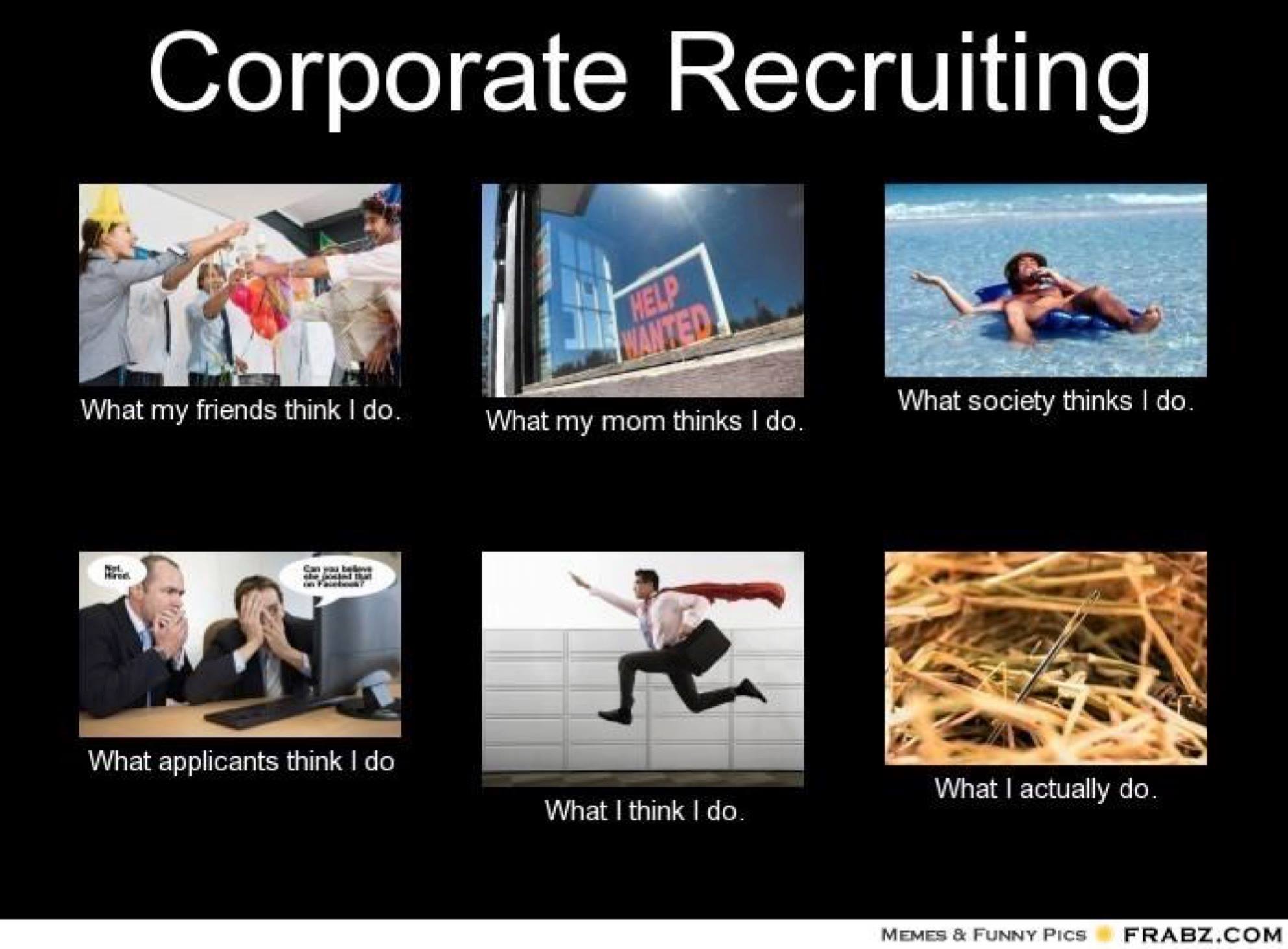
Can you hit the ” I believe ” button ?

Do yourself and your career a big favor. Avoid working for a company with a narcissist at the top. Why you ask ? because these types tend to overspend on investments, deliver substandard results, are pathological and will turn to suit their own agenda.
Trust me – narcissist leaders talk a good game but WILL NEVER live up to it. Not surprisingly, their tenure at companies is usually short, and they burn through great people – some of them leaving suddenly and without warning.
Narcissists may do the most damage at the top, but they can disrupt workplaces at all levels. They possess very little empathy and have grandiose views of themselves, leading to feelings of entitlement and a constant need for a new ” shiny toy ” such as ” Holacracy ” . Ask Zappos how that is working …..
” When you meet a narcissist at a party, they can be charming, same as when you interview with one – but that mask will fall off in the workplace.
On the plus side, some narcissists are very creative and have high energy and a strong desire to get things done – but, on the whole, the best way to avoid dealing with a narcissist is do not hitch your wagon to one.
There you have it …..
More on Micro-Management

People don’t leave bad companies. They leave bad bosses. They don’t leave flawed organizational structures and abandon lousy products and technology. They leave flawed leadership.
No matter how brilliant a company’s products and/or services may be, if management is dysfunctional, that company will inevitabley have problems. It may not be right away – or as they scale and grow – but trust me it is a house of cards – and nearly a guarantee that it will happen. This concept may sound obvious – but it continues to happen.
There is so much emphasis at the executive level on IQ in organizations, and not enough on leadership, and general behavior. The problem? A complete lack of emotional intelligence, insecurity, general manners, inexperience, sometimes Narcissism or even Pathological thinking – and sheer incompetence on the most basic level.
” Micromanaging is a method in which an individual closely observes or controls the work of an employee” . In comparison to simply giving general direction, the micromanager monitors and evaluates every stage in a process, from beginning to end. This behavior negatively affects efficiency, creativity, trust, communication, problem-solving, confidence, and the individual’s and the company’s ability to reach its goals.
The typical micromanager spends their time directing employees rather than empowering people to be self actualized and take ownership of what they are doing. Our experience is that they are often very insecure in their own right and they spend more time with the details of business operations instead of planning the company’s short-term and long-term growth strategies. There is a huge difference between leadership and simply using one’s title, position and given authority, to exercise political and/or bureaucratic power. We have seen this play out – its not pretty. The effects of micromanagement can be disastrous and destroy a company’s culture early. People soon realize that they are not being listened to, so they will undoubtedly shut down, stop making suggestions or asking questions. Finally – people will become disenchanted and will eventually ask for the check – and take their skills elsewhere – maybe a competitor.
Much of the time, these wanna be leaders believe that they are the only ones who understand the business and are the sole reason for the company’s success. They will often surround themselves with people who don’t question their authority, or are the classic ” yes man ” and fail to challenge or criticize their actions, OR are so afraid and have been beaten down so far – that they actually are questioning their own skills and abilities.
It is for all these reasons that these types of managers will never be truly successful LEADERS – of course, exceptions are noted, we often hear of executives who behave this way – Steve Jobs is the most well known – but for the most part, they just do not possess the skills or characteristics required to deal with people in a productive and meaningful way.
The underlying issue of micromanagers is that their behavior is based on fear, not reason or evidence. First and foremost, their fear drives their need to control the details and processes, and their need for constant recognition further feeds this monster. It’s not uncommon that most people who work with micromanagers have adapted their own behavior to try and prevent confrontation, or are so afraid and have been beaten down so far – that they actually are questioning their own skills and abilities – this only makes the problem worse.
A classic behavior is the absolute failure to prioritize, making managerial and operational rhythms suffer or even no existent. “Post-mortem” meetings become the norm, public floggings rather than after-action reviews. Blame is thrown in every direction except the CEOs and the general energy and attitudes diminish rapidly – and turnover gets worse.
CEOs set the tone of an organization. When behavior is erratic, chaotic, and without rational logic – and they manage without a solid foundation or strategy, the whole operation turns into fire drills, with everyone running around like the poor beheaded chicken.
Sadly – the only thing this creates is a sustained pattern of hystrionics , frustration, fear, and lack of any true direction.
How to RUIN your EVP

There is a great deal out there on the importance of building a strong employment brand and how essential it is to carefully nurture the relationship with job seekers and current employees. We feel strongly that all companies – no matter how big or small ( actually small companies need to care deeply about this ) should be acutely aware of the importance of investing time and money into building an attractive employment brand, and creating the absolute BEST candidate experience.
Yes this can be a time-consuming, can cost money and resources – but should be viewed as an essential ingredient in any talent acquisition strategy. If it’s not well taken care of, it can bring long-term damage.
I’ve heard this quote many times and I tend to believe it’s true: “It can take years to build a brand or impression – and only five minutes to completely destroy it” – this speaks to the ” first impression ” discussion in a previous blog – but I digress…..
So, here they are, 3 ways to completely destroy your employer brand, and sadly we see this out there every day.
1. Offering a poor applicant & candidate experience. The sad truth is that many companies are doing the bare minimum here and do not go the extra mile to ensure that this experience is relatively seamless and positive. Candidates generally put a great deal of effort into resumes, cover letters, application forms, writing exercises, doing company research or interview preparation. It has almost become acceptable for companies to ignore these applicants and too many companies are creating excruciatingly long application and interview processes. BAD MOVE ! The candidate experience should be as important to both job seekers and employers, it is another way to speak to the market around what your company is all about.
2. Not acknowledging receipt of an application or resume – this is the ” black hole ” concept of corporate recruiting – or worse not giving feedback or just not doing performance reviews to existing employees. Humans crave feedback and performance reviews and these are among the most valuable resources for a company. Ideally, regular conversations should be taking throughout the year as performance problems can be easily resolved when they are promptly brought up and good performance can be enhanced if people are given positive feedback. In addition to regular feedback, a more formal annual or bi annual performance review should also be given. Sure – these can be time-consuming, but ” forgetting ” or avoiding this process is taking away the opportunity to reflect, reset and re-focus on achieving new goals and professional growth.
3. Failing to keep promises. There’s nothing worse than failing to match the reality of what a new employee was promised – the ” not as advertised ” syndrome. All employees are expecting the company to deliver on its promises, to be honest and open in all communications, to invest in them and treat them fairly. Therefore, each company should make sure everything they promised will be delivered once the employee joins the business. This is a sure way to find greater success in talent attraction and keeping great people engaged.
In the ” Glassdoor ” world we live in today — with true globalization and your business becoming increasingly transparent, word can get around very quickly – therefore all employers should be aware that their EVP – employer value proposition – can provide them with a strong competitive advantage.
What Makes a Great Boss?
Its just this easy !

1. Communication: A great boss is a communicator who has the ability to relate deeply to others, someone who is able to empathize and recognize the talents in their employees and peers. They have strong emotional intelligence and self-awareness, and speak and act with integrity
2. Delegation: Great leaders know when and how to delegate and, for the most part, remain removed from the project, trusting their employees to be professional and produce results. They know that being involved in the granular details of these projects is a waste of their time, and inhibits their employees from feeling free to do great work. They know that they should trust their employees and don’t micromanage to the point of distraction.
3. Fairness: There is a difference between treating employees equally and treating them fairly. Let’s face it: Not all employees are equal. Everyone is different. Some employees create different value within the organization. A great boss treats everyone fairly, but not equally.
4. Humility: Great bosses understand that the business is not about them. Leaders have to be able to talk and listen to their employees on all levels of the company. At the same time, they must have the respect of their employees, the kind of respect that’s earned by being honest, having integrity, and being humble.
5. Responsibility: Leaders take responsibility for their actions. If you make a mistake, own it. Don’t blame others for your lack of self-awareness, or make excuses for failed projects and blown deadlines.
Re; counteroffers – the following hold up.
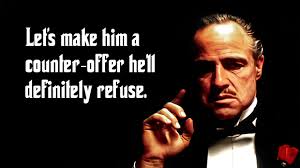
Let us now examine the reasons why candidates should never accept a counter-offer, after they have already accepted OUR offer.
1: You have now made your employer aware that you are unhappy and moving forward your commitment will always be in question.
You’ve made your current employer aware of your intention to leave. Your boss now knows that you were unhappy for long enough to search for, apply for, interview for, and accept a new position. You may think that it was the company’s fault that you wanted to leave but many times your boss will be pissed off at you for having the audacity to look for work somewhere else. You will be considered disloyal even though they were the ones that did not provide a stimulating work environment, enough $, whatever it is? This image of disloyalty will haunt you and little things like taking a day off here and there would put you under suspicion of going to interviews again, and always under the microscope. Who wants to work under those kind of conditions? Some people naively think that if they make it public that they could go elsewhere, either by resigning and then accepting a counteroffer or by making it public that a recruiter called them about a job, they will strengthen their value at their company. The exact opposite is true. What’s more is that by accepting a counteroffer you look disloyal AND untrustworthy. You’ve given your word to another company and you’ve broken it just like that. This will still register with your boss and even more so when the initial relief at keeping you has worn off.
2: When promotion time comes around, your boss will remember who is loyal and who isn’t.
When the time comes to decide who will be considered for a promotion your employer is definitely going to remember who almost went to work elsewhere. Many bosses reward blind loyalty more than anything else. Who do you think they’ll choose? Can you imagine the conversations the seniors will be having? “Joe should get it because he is one of our best workers and has the right attitude” “Bob should get it over Joe because his work is almost as good and remember, Joe almost went to work elsewhere, who’s to say that if we promote Joe that he’ll still be here in a year? Bob’s the guy, he’s the most loyal guy we’ve got” “But if we choose Bob then Joe might leave” “Bob might leave if Joe gets it and then Joe might still leave, he’s threatened it once before” “Okay, let’s go with Bob, even if Joe leaves we’ll still have Bob and you’re right, he is the most loyal guy we’ve got”. If you accept a counteroffer, you will have branded yourself as an employee who is susceptible to leaving the company and will probably not be given serious consideration for future promotions. Further, you may not be given the opportunity to work on the best assignments because management feels that it risks losing you mid-project.
3: If times get tough, your employer will begin the cutbacks with you.
You will no longer be held in high esteem, and if the company ever needs to make redundancies are they going to choose to let go – someone else – (whose loyalty has never been questioned and is probably earning much less than you for the same work because they needed to give you the moon on a stick to stay) or you? They already knew you were unhappy and didn’t really want to be there. Why would they keep you when this would be the perfect chance to make the necessary cutback and it not look like revenge or feel guilty about letting someone go?
4: You will burn your bridges with your prospective employee and may possibly get a bad reputation.
If you accept a counteroffer you will burn the bridge with your prospective new employer. If you had accepted a new offer, your new employer was expecting you to show up. Your new employer had made announcements about you coming on board, had cancelled job advertisements and had arranged for training. Your new employer may have taken on new projects or informed clients of planned progress. You are now leaving your prospective employer up the creek without a paddle. You’re not joining may have massive impacts on project delivery and may result in your client losing work or money. If it was a small company you were joining you might just have made such a mess at that company that other Peoples jobs are now in jeopardy. If your new employer pulled the rug out from under you by rescinding the offer, how would you feel? Don’t pull the rug from under them. It’s like being jilted at the altar or dumped on your birthday.
5: Accepting a counteroffer is a blow to your pride. You know you were ‘bought’.
If you accept a counteroffer, you would be little more than a trophy bought with some pocket change. Do you want to work somewhere that you’re not valued properly.
6: Where is the money for the counter-offer coming from? Is it your next pay rise early?
Since all companies have salary guidelines, it is possible that all you got was your next increase. The raise after that would probably disgust you into looking to leave again but by then you would have burned a bridge, remember? See #4. Why did you have to resign to get the attention around $ ???
7: Statistics show that if you accept a counteroffer, there is a ninety-four percent chance you will be out of the job within 12 months (and a seventy percent chance that you’ll be gone in 6).
Much research and many surveys have been completed over the years to measure what happens to employees who accept counter-offers. Only 6 out of 100 employees are still with their company after 12 months, and 3 important points become apparent:
Salary was hardly ever the prime motivator for resigning – more money didn’t ultimately change the true state of play
Things didn’t take long to return to the way they were before that led you to resign
It seemed as though your boss didn’t trust you any more
More statistics that show that 94% of those who accept counter-offers leave within 12 months anyway (or are terminated) should be worrying enough to make you think ‘Why would I want to be in that position?’
8: What type of company do you work for if you have to threaten to resign before they pay you what you’re worth?
Why didn’t they pay you that before? Very simply. It was because they didn’t think you were worth it. Yes, that’s right. They. didn’t. think. you. were. worth. it. Harsh it may be to think or to say but it is the truth. If you truly value an employee you will want to make sure that they never leave.
Your true value was established at the new company. They thought you were worth a lot more than your current company. Why did you have to threaten to leave before you were paid what you are worth? Your colleagues may know you had handed in your notice. If you stay because you accept a counteroffer with more pay, will they resent you for it? Will it affect the environment in your office?
Being made an attractive counter offer is good for your ego, but you must take a number of things into consideration. You have only received a counter offer because you resigned. It is a purely reactive tactic from your employer and should make you wonder whether you need to resign every time you want to improve your situation. If your employer thought you were truly worthy, why didn’t they improve your situation anyway?
Things to be wary of when being made a counter-offer:
- Your boss making you feel incredibly guilty and disloyal
- The are “Loving” you like never before – be very suspicious of this !!! In disingenuous
- Your boss saying things like: I had no idea you were unhappy. Let’s sit down and discuss what we can do to ease your concerns and see what we can do to keep you on the team. OR this is the good one – I was already considering you for a promotion and raise so I wish you would have come to me sooner, I could have eased your concerns. Let’s talk about what I had in mind for you before you make any rash decisions.
If you turn down a counteroffer and leave, the only consequences you’ll face are those that relate to the challenge of a new job. But you were up for that right? That’s why you accepted the job and handed in your notice. But if you accept a counteroffer, you may face a backlash. Since you have been considering another opportunity this calls into question your loyalty to the company.
A great deal of time if they’re willing to give you a big offer just to keep you around, they’re probably only going to keep you until you’ve finished training your replacement.
The easy decision is always to accept the counteroffer, the money is good, you know the company, you know your colleagues but this is false economy. Eventually you will end up leaving, either through no choice of your own or because you realize that you just don’t want to work there any more. The only thing is, you missed out on that dream job X amount of months ago when you had your head turned by the jingling pockets of the boss you’re about to leave anyway.
9. Finally – you gave your word to your new company and CEO – what else do you really have if you cant keep that ?
Recruiting is not just the ” HR guy ” anymore – Its Talent Acquisition of course !

Recruitment – which, if you are living in the modern corporate world, is now widely referred to as Talent Acquisition – continues to evolve enough so that we recruiters have become our own organization and not just part of the HR group anymore.
Lets face it. Right behind sales, in a close second, recruiting is the pointy end of the spear. We talk to potential customers, employees, ambassadors and everyone else across the spectrum.
What do CEOs worry about? Ask a few and you’ll hear about Talent. Are we bringing in the right people to the organization, at the right time, with the right attitude, skills, and overall demeanor that fits our culture?
What do you think drives company culture? The answer is the people – or the talent – that you acquire. There you go.
Gone are the days of help-wanted advertisements and personnel departments. I hope that this is the case in your world. None of us long for the days when headhunters – that’s right I said it – headhunters – relied on their Rolodex to place candidates.
The ATS is the heavily invested tool that technology-enabled companies rely on for recruitment activities and reporting. Excuse me, Mr. CFO? You don’t know what an ATS is…hmm…well, I’ll give you a hint – it’s not an HRIS.
Yes, it can be cumbersome and clunky, and demand step-by-step processes, but if you are growing and are serious about this endeavor called Talent, then you must have one. Get a Best-in-Breed system, one that’s cloud-based, like Jobvite, or a similar tool.
Some are better than others. Yet, the purpose of the ATS is not necessarily there to make the recruiter’s role easier, efficient, or more effective.
Rather, it’s built for hiring managers to lean in to the process, to pull reports and enable a productive online experience for candidates.
Candidates still offer feedback that their resume is uploaded to a “black hole” and when they receive an electronic message to acknowledge or decline their application, the mass communication lacks a personal connection and trust in the organization they seek employment with. This much sought after two-way human interaction is missing from the “enabled, candidate focused” system. The reports are often riddled with the potential risk of poor data integrity. For the recruiter, the task of reading every resume received and determining yes to screen or decline or maybe is not unlike the previous method of A-B-C piles.
Job boards once dominated the market, offering the candidate access to job listings from multiple industries in one easy place. Over time, they offered employers the opportunity to market not only their hiring needs, but also their employment brand.
Today, organizations rely on their corporate website and sites such as LinkedIn to achieve the same goal. Job search engines such as Careerbuilder and Indeed allow candidates to search many employer websites in hopes to find a new job.
RPO hit the market and many industries have tried and some continue to employ this outsourcing model. BEWARE – it takes most controls away and you face the risk of losing any type of culture or brand transfer in the process. Then there is the Vendor management system that bridges the relationship between agencies or headhunters and their corporate clients. Again, be careful here, as you can lose something that is called BUILDING A RELATIONSHIP with your candidates and your vendors.
Human analytics is important – but remember it is a data point ONLY – not the gospel according to Wonderlic or whichever instrument you use – this has become much more than a ” cottage ” industry as everyone and their brother seems to be in this business. Testing and assessment centers were once heavily relied upon. Today online psychometric testing is used to assess a candidate’s fit. “Which-animal-are-you?” interview types of questions were once popular, but lately we’re accustomed to the series of behavioral interview questions.
Currently social media, social networking, and online and video interviewing help to create a positive and interactive communication with candidates, hire top talent, and enhance one’s employment brand. Mobile technology offers better means to enhance the two-way communication with candidates.
Sourcing became (and still is) a critical skill for recruiters. With the presence of Google and access to the Internet, Boolean search strings became a hot commodity. Today, innovative ways to source top talent is an art form. Professional networking groups open doors for one to attend events as a recruiter and network to uncover the next best candidate.
LinkedIn took this notion to the next level tenfold, and today many recruiters use this professional social media website as their main hunting ground.
LinkedIn Recruiter provides a solution to managing talent pools. CRM is the latest buzz for recruitment, leveraging a system that marketing professionals have used for years. Regardless of which system is employed, technology has no doubt contributed by proactively creating talent pipelines to meet critical hiring needs.
Recently, there is debate on whether recruitment, which is currently in some organizations a function under human resources, should fall under marketing. Another option is that it moves higher up the food chain – I report to our CEO, which works well in my case.
But many agree that recruitment should function as its own entity. Although there is merit in partnering with HR and marketing among other key stakeholders, as Talent Acquisition professionals we provide a unique and invaluable service to our hiring managers, senior leaders, and CEOs.
I question as to why are we not listed as our own function. And why can we not have our own listing in the drop down menus of job boards? We are lumped under Human Resources. HR has an important place in a corporation, and some of their governance can apply to hiring. However, acquiring talent is a skill of its own, and most HR generalists are clueless here (apologies to my HR colleagues and friends). Many organizations understand this and have a separate leader and team structure to support the attraction and acquiring of new talent into and within their organization. We are labeled as TALENT, not HR specialists, and rightly so. It’s time for the next stage in our evolution. It’s time for us to showcase our function as a key contributor, noteworthy of distinction…because we already are.
The way in which we interact with hiring managers and senior leaders has also evolved. We were once an order-taker and now are partnering with managers to understand their hiring needs, conduct panel interviews, evaluate candidates, and close the deal, i.e. hire the chosen candidate. Today, in many cases, the recruiter is a right-hand partner, providing advice and guidance not only on the hiring process but also the job market, strength of internal and external candidate pools, and industry trends. With data come analytics and potential solutions to key challenges. As an industry of professional Talent Acquisition experts, we are getting better at this every day. The emergence of “big data” and metrics helps to identify critical talent, enables us to source more strategically, and provide intelligence on how the competition is performing in efforts to hire talent.
It’s time to be visible, on our own; relevant, strategic, and to be separate and not a division of someone or something else, not a separate department reporting to an Staff Executive who really has no clue about what it costs to hire the very best people.
It’s this simple: Talent Acquisition leadership needs a seat at the table.
Be a Leader !

“The best executive is the one who has sense enough to pick good people to do what he wants done, and self-restraint to keep from meddling with them while they do it.”
It’s time to just grow up and be a LEADER!
Of course you can’t always have the right answers. There is a word for this, its starts with Narc – and ends with Cist – figure it out smart guy! NOT GOOD! Your command and control style may have worked well in the military – but it will not encourage anyone to follow you into battle and won’t be inspiring I can assure you. Managers and leaders are often referred to synonymously – WRONG! Level 5 leadership is Jim Collins’ term for the leadership demonstrated by leaders of what he defines as “”great”” companies, those that have gone from “”good”” to “”great.”” The previously good companies had to be led to greatness; they were not just born into greatness.
See good-to-great for more information.
Collins says that these leaders:
- Creates superb results, a clear catalyst in the transition from good to great.
- Demonstrates an unwavering resolve to do whatever must be done to produce the best long-term results, no matter how difficult.
- Sets the standard of building an enduring great company; will settle for nothing less.
- Looks in the mirror, not out the window, to apportion responsibility for poor results, never blaming other people, external factors, or bad luck.
That they absolutely posses:
- Demonstrates a compelling modesty, shunning public adulation; never boastful.
- Acts with quiet, calm determination; relies principally on inspired standards, not inspiring charisma, to motivate.
- Channels ambition into the company, not the self; sets up successors for even greater success in the next generation.
- Looks out the window, not in the mirror, to apportion credit for the success of the company-to other people, external factors, and good luck.
Only leaders allow their employees to solve problems with their own insight. The truth of the matter is this: Every leader may not be a manager, but every manager MUST be a leader. It’s easy to see that leadership and management is not the same thing, but a manager who lacks effective leadership traits will drive a business into the ground FAST – ask any VC who has had to make changes in a portfolio company leadership team. Change does not happen overnight when it comes to transforming managers into leaders. It takes time and energy to improve the way you manage and utilize more leadership characteristics on a daily basis. Lets break it down – because of course it’s pretty simple.
1. Managers “ tell “ and give answers, leaders ask questions and provide insight. There’s nothing more certain to turn your people against you faster than shouting orders at them. Why not spare yourself the impending resentment and simply ask this: “What would you do?” or “What do you think of this idea?” Allowing people to participate in the decision-making process will not only transform what could have been an order into something more easily swallowed, it also inspires creativity, motivation, autonomy and yes collaboration.
2. Managers criticize mistakes, leaders call attention to mistakes and address them indirectly It may seem more efficient to point out mistakes directly, ITS NOT – this will only leave people questioning heir own abilities, feeling embarrassed, frustrated, confused, and resentful. Wouldn’t you rather be giving them the chance to learn and grow? Give your people chance to provide their input, while also improving for the future.
3. Managers forget to praise, leaders recognize growth and improvement. Praise means something, don’t get caught up in the always being critical – perfectionist trap! Finding time to recognize your people for even the smallest accomplishment will only increase their interest in what they do. Regular feedback and recognition is certain to do the trick. Everyone wants to be genuinely appreciated for his or her efforts. Even you!
4. Managers focus on the bad; leaders “ lead with “ the good. This really comes down to seeing the cup half empty or half full. If you are the person who is only willing to point out the flaws of a project or a certain resource, then you’re not giving people much interest in learning. Try this – start with some form of praise, follow with the criticism r observation, and end with praise, it makes the discussion more palatable and means more.
5. Managers want credit; leaders give credit to their teams. Managers who lack leadership ability are always first to take credit, “ it was my idea “ – sound familiar – TOO Bad – GET HELP! But TRUE leaders understand the importance of crediting their teams for the wins. This pays off BIG in the long run and creates a more positive company culture and people who care – and are driven toward more collaboration and sharing the WIN. Remember – management is not a force to be reckoned with – but is an influence.
C’mon – be a leader – NOT a Micromanager who has to be involved in every decision and process, you will never grow if you don’t and you will probably be replaced sooner than later!
First Impressions are not Everything! (and other counterintuitive myths)
I know it’s hip to be counter-intuitive, contrarian, and a little ironic these days. I mean, I love “Portlandia” as much as you do. If you don’t, then can we at least agree on The Colbert Report or Jon Stewart… right?
Irony and counter-intuitiveness has even made its way to Linkedin, which recently reposted an article in Business Daily that began with this quote:
“Thinking blending in is good for your career? Not necessarily. In fact, dressing differently just might help you get ahead at work.”
And where did Business Daily get this nugget of ironic wisdom? Elton John? Or if you don’t remember him… Lady Gaga? No – they gained this nugget from – wait for it – a Harvard professor. Well, not a professor exactly…it was co-authored by a Harvard doctoral student. But you get the drift. An “allegedly” smart individual.
But here’s the thing. Wearing T-shirts and a three-day growth of beard for you guys, and flip-flops and a tank top for the women, might cut it if you do get the job at that high growth technology start-up that provides employees with a diving board so they can dive into a vat of Jell-O to blow off steam, or relax in the meditation room for those days that you need a break …but the thing is… first you have to get the job. Then you can dive into the Jello.
Actually, it’s no laughing matter if you want a job. If you think that dropping a swear word in to familiarize yourself in the interview, or having a drink to, “loosen things up a bit” is a good idea, well, it’s not, because you’re not living in the “Mad Men” era. Those things aren’t considered sophisticated on job interviews in 2014. There wasn’t a ton of Human Resource activity back then. (And if there was, it was likely in a smoke-filled room with a whisky cart nearby.)
So LOSE the outlier-style statement (You’ll have plenty of time to prove your individuality when you get the job). Look good, dress appropriately, and DON’T ASSUME anything.
Now for my good news, and a little advice, too, because there are still things that really matter when you’re looking for the right job. So for now, let’s take the beard, T-shirt and flip-flops off the table – with all due respect to Harvard’s doctoral students – and focus on the reality of the old standbys that still matter to hiring managers, recruiters, and about everyone else whom you need to legitimately impress in order to move to the next level.
Flip-flops off? Wearing well-fitting, appropriate articles of appropriate clothing? Great, let’s begin with what you actually need, and what still matters:
- Timing: Use your gut instinct. Search the job boards, see who’s in and who’s leaving, and when you sense it’s time to strike, hit it. Look at growth organizations that can benefit from your experience. Trust me – high growth is challenging as you sometimes might have hired the wrong person a year or two ago – ad your top grading the organization hard. It happens !
- Follow Up: Once you get that interview, or, increasingly, a series of “discovery ” sessions (come prepared to be interviewed by multiple people from different departments), then follow up with each of them in writing. And for the love of god, word each note differently, with a reference to what was discussed in the meeting. You would be AMAZED at who doesn’t practice this lost art of basic courtesy. Thank you notes, whether email or paper (email is fine), never go unnoticed. I would recommend a hand-written note to the most senior people you meet – another lost art that says a great deal about it in a positive way . Get some stationary: you’re a professional, after all. You may not get the job, but you’ll win points for class and respect, and a general sense of style never hurts.
- Punctuality: Do not be late for an interview. Never, never never. The interviewer can be late – bad form as it may – but not you. Repeat this phrase in your head ten times: I am selling myself and EVERYTHING I say or do is reflective of what type of person I am and employee I’ll be. No, make that twenty. Speaking of, arrive early – not thirty minutes, but 15-20. (C’mon, you can do it.) No one minds people waiting in the reception area – that’s why companies have them.
- Materials: Don’t assume your interviewers have clicked through all your links to your resume or white paper or blog or whatever, unfortunately most have just looked at it for he first time 5 minutes before you walked into their office. Be able to speak to your background – tell a story. Bring physical material. Create a slide deck or something clever, and make it short and image rich – not a ton of text. So bring your best stuff – you have it, right? – and show people you care about this experience and want this job. Because guess what – I have interviewed thousands of candidates – and it shows every time you meet someone who cares and has PASSION around what they are doing and how they present themselves etc .
- Energy: I’m going to level with you, because I’ve seen thousands of candidates come and go, and if there is one thing you must demonstrate, it’s energy. Intellectual curiosity. Good humor. Brisk movement. Self actuated, involved in the discussion, not just answering questions. So PLEASE – LEAN in – give it your all but be receptive to comments and not overbearing, whatever the role your interviewing for. Oh and POLISH your shoes – smart interviewers notice EVERTYTHING. Showing goes a lot further that telling!
- Passion in Delivery: Again – more on his – but an interview is no time to act like you don’t care one way or the other if you get this job – IT SHOWS. Playing hard-to -get is for sophomores, folks. Know it. Live it. You have to want it, and you have to let them know you want it. Let them know what you like about their company, and why you think you can be a part of it. Position the adventure that they are on and let them know you are into joining and why. And most important, let them know how you want to help the organization grow – because you have been around, have seen that, had this experience etc., etc. Trust me when I tell you – smart interviewers listen much more than they they talk in a session – they’ll be listening to you closely, both for content and for style. In this case, passion for the job is style.
EVP – Employee Value Proposition: Ask what it is – why they joined , what did they see that helped them decide to join the adventure? How long have they been here – have they moved into new roles? THEN – help them understand what you can bring to the party. Wait. Back up. Not the usual string of clichés about being a team player blah blah blah, but what do you bring to the company? Do you see what I mean? Rather than saying, “I think I’d be a good fit,” think about something like, “It looks like you are investing here – I have experience relative to that when I was at XYZ and we monetized that to ABC – or whatever. Again – tell a story here.
So you are armed and ready. Be engaged – dress like an adult that has had some success, be curious, CARE about what you are saying and doing – and oh yeah – get those shoes shined and that suit cleaned!
Happy interviewing!
 Corporate Dyak